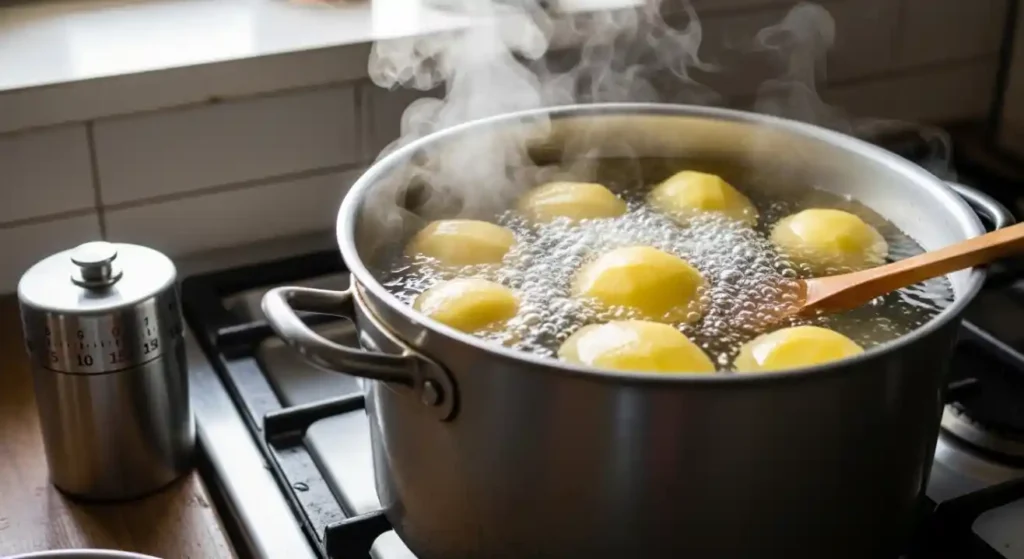
Boiling potatoes sounds simple — and it is — but getting the timing right makes all the difference. If you’ve ever ended up with mushy potatoes or, worse, hard ones that fall apart on the fork, you already know how long it takes a potato to boil is actually worth knowing. The answer depends on size, type, and what you’re making. Let’s break it all down in plain terms.
Why Boiling Time Varies So Much
Not all potatoes are created equal. A tiny baby potato and a large russet are worlds apart when it comes to boiling. Size is the biggest factor, but the type of potato matters too. Waxy potatoes like red or fingerling varieties hold their shape and cook a bit faster. Starchy ones like russets get fluffy inside but can fall apart if overcooked.
Water temperature also plays a role. If you drop potatoes into cold water and then bring it to a boil, you get more even cooking throughout. Starting with already-boiling water speeds things up on the outside but can leave the center undercooked.
How Long Does It Take a Potato to Boil — By Size
Here’s where things get practical. These are general guidelines using medium-high heat with a rolling boil:
Whole potatoes:
- Small (golf ball size): 15–20 minutes
- Medium: 20–25 minutes
- Large: 30–40 minutes
Cut potatoes (cubed or halved):
- 1-inch cubes: 10–15 minutes
- Halved small potatoes: 12–15 minutes
- Quartered medium potatoes: 15–20 minutes
The fork test is your best friend here. Poke the thickest part — if it slides in without resistance, you’re done. If there’s any pushback, give it another 2–3 minutes.
How to Power Wash a Chromebook Complete Guide
Boiling by Potato Type
Russet Potatoes
Russets are starchy and absorbent. They’re great for mashed potatoes but fall apart easily if boiled too long. Whole medium russets need about 25–30 minutes. Cubed, they’re done in 12–15 minutes.
Red Potatoes
Red potatoes are waxy and hold their shape beautifully. They work great in potato salads. Whole small reds cook in about 15–20 minutes. Halved, they’re ready in 12–15 minutes.
Yukon Gold Potatoes
Yukon Golds sit right in the middle — a bit starchy, a bit waxy. They’re incredibly versatile. Expect 20–25 minutes whole, or around 15 minutes cubed.
Baby Potatoes
These little guys are quick. Whole baby potatoes usually take just 12–15 minutes. Because of their small size, they cook evenly and are hard to mess up.
Sweet Potatoes
Sweet potatoes take a little longer. Cubed, they need about 15–20 minutes. Whole medium sweet potatoes can take 30–40 minutes. Watch them closely — they go from perfectly tender to falling apart quickly.
Should You Start in Cold or Hot Water?
This is a genuine debate in the kitchen, and both methods have merit.
Cold water start: Place potatoes in cold water, then bring to a boil. This method cooks potatoes more evenly from the outside in. It’s the better choice for dishes like potato salad or mashed potatoes where texture matters.
Hot water start: Drop potatoes into already-boiling water. This is faster but can lead to uneven cooking, especially for large whole potatoes.
For most everyday cooking, the cold water method wins. Add a generous pinch of salt while you’re at it — it seasons the potato all the way through.
Pros and Cons of Boiling Potatoes
Pros:
- Simple and requires minimal equipment
- Works for almost every potato dish
- Faster than baking
- Easy to control doneness with a fork
- Retains more nutrients than frying
Cons:
- Potatoes can become waterlogged if overcooked
- Some nutrients leach into the water
- Less flavor compared to roasting or frying
- Easy to overcook if you’re not watching
Common Mistakes People Make
Even with something as basic as boiling potatoes, it’s easy to go wrong. Here are the most common missteps:
1. Not salting the water. Unsalted water means bland potatoes, no matter how good your toppings are. Salt the water generously before boiling.
2. Cutting pieces unevenly. If some pieces are large and others are tiny, they won’t cook at the same rate. Try to keep cuts consistent.
3. Skipping the cold water start. Dropping large potatoes into boiling water leads to a cooked exterior and an undercooked center.
4. Overcooking. Leaving potatoes in boiling water even 5 minutes too long can turn them mushy and waterlogged. Start checking early.
5. Not draining immediately. Leaving boiled potatoes sitting in hot water keeps cooking them. Drain as soon as they’re done.
6. Boiling with the lid off the whole time. A lid helps maintain a consistent boil and speeds up cooking. You don’t need it locked tight, but keep it on loosely.
Best Practices for Perfectly Boiled Potatoes
Follow these tips and you’ll nail it every time:
- Use similar-sized pieces so everything finishes at the same time.
- Salt the water well — it should taste noticeably salty, like a light broth.
- Start in cold water for even cooking.
- Cover the pot loosely to maintain a steady boil.
- Check early and often with a fork once you’re in the expected time range.
- Drain immediately and let steam escape for a minute or two before using.
- For mashed potatoes, give them a few extra minutes so they’re very soft and easy to mash.
- For potato salad, pull them slightly early — they’ll continue to cook a little from residual heat.
Conclusion
Boiling potatoes doesn’t need to be complicated, but knowing the right timing for your specific potato makes a real difference on the plate. Small cubes are done in around 10–15 minutes, medium whole potatoes in 20–25 minutes, and large ones can take up to 40 minutes. Always start in cold salted water, check with a fork, and drain the moment they’re tender. Once you dial in the timing for the potatoes you cook most often, it becomes second nature. Good food starts with the basics — and this one’s worth getting right.
Frequently Asked Questions
1. How long does it take a potato to boil if it’s whole?
A whole medium potato takes about 20–25 minutes in boiling salted water. Large whole potatoes can take 30–40 minutes. Always use the fork test to confirm doneness.
2. Does cutting potatoes make them boil faster?
Yes, significantly. Cutting potatoes into 1-inch cubes reduces cook time to around 10–15 minutes, compared to 20–40 minutes for whole potatoes.
3. Can you over-boil potatoes?
Absolutely. Overboiled potatoes become mushy, waterlogged, and lose flavor. Start checking a few minutes before the recommended time using a fork.
4. Should I add salt when boiling potatoes?
Yes — always. Add a generous amount of salt to the water before boiling. It seasons the potato from the inside out and noticeably improves the flavor.
5. How do I know when boiled potatoes are done?
Insert a fork or knife into the thickest part of the potato. If it slides in easily with no resistance, the potato is done. If there’s any push-back, continue boiling and check again in 2–3 minutes.